Below provided by: Chinese Historical Society of America
As we all continue to navigate the challenges surrounding the health and safety circumstances currently affecting our community, the nation, and the world at large, CHSA has respectfully delayed the opening of our upcoming We Are Bruce Lee exhibition. Amid these ever-changing times, know that the health and comfort of our community is of the utmost priority and importance to CHSA, and we are carefully monitoring and adapting to the relevant guidelines in order to determine a new exact grand opening date.
We will get there.
As Bruce himself said, “Be Water, My Friend.” We are looking forward to sharing with you We Are Bruce Lee in early 2022.
Please stay tuned for more information as we announce updates to the exhibition and other programming and content. To learn more about or support this exhibition, check out We Are Bruce Lee and follow CHSA.
In the meantime, pre-sale tickets will be made available soon, with CHSA members receiving first priority. For more information on how to become a member, to help sustain our museum’s work, please visit CHSA.org.
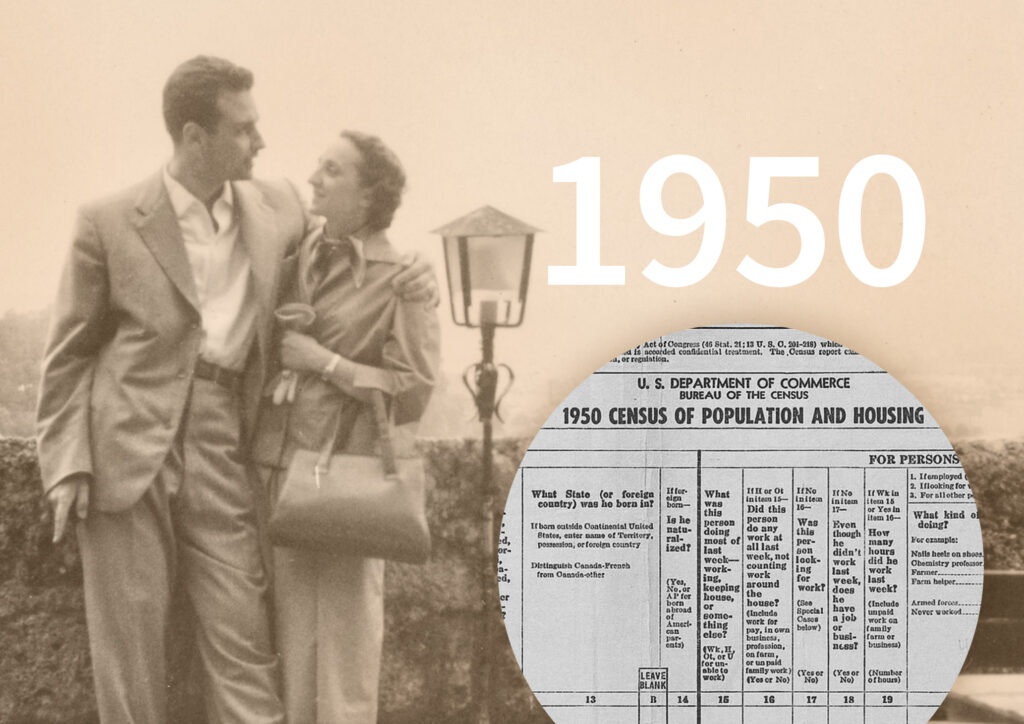
I just got this from fellow genealogist Renee Carl last week. “NARA just dropped a press release announcing that the 1950 Census will be powered with an AI/ML/OCR name search.” Renee was involved in a beta test and was seriously impressed with this Artificial Intelligence/Machine Learning/Optical Character Recognition technology. I encourage you to read the NARA release she links to. It sounds like this technology will allow you to search for names right from the time the census is released on April 1, 2022, but in case you can’t find who you are looking for, there are actually other ways.
When the 1940 census results were released in 2012, the volunteers at Family Search, the paid indexers at Ancestry and other people took about 4-6 months to index the records, so this technology could save us many months of waiting. In case you can’t find your family through this name search right away, you can also search through Enumeration Districts (E.D.s), which are smaller segments of a community and not too difficult to look at block by block.
There are ways to figure out ahead of time which E.D.s your family members may have lived in so you can look in them as soon as the census is released on April 1. I just attended a webinar by Thomas MacEntee and he had two handouts he encouraged us to share (please attribute them to him if you pass them along). One is full of great information and links (ignore where he says the 2022 release date is two years away!) and the other is a spreadsheet you can use to input your family’s (or whomever you are researching) information in an organized fashion, which he describes in the informational handout. If you know or can figure out where the person you’re researching lived (there are many directories online, or you can use correspondence or ask someone who was alive then), you can use an amazing tool developed by Steve Morse (developer of the Intel 8086 chip!). Go here:https://stevemorse.org/census/unified.html and click on 1950 in the pull-down menu at the top of the page. Then pull down the appropriate information to find out which enumeration districts correspond with the address you’re looking for.
It also works for rural areas. For example, a lot of people have roots in the Sacramento River Delta – towns like Isleton, Walnut Grove, Locke, Courtland, etc. You can select Sacramento County, then under city, choose “Other.” I typed in “Courtland,” and got 34-119, which includes ” GEORGIANA JUDICIAL TOWNSHIP (TRACT SC-136) BOUNDED BY (N) COUNTY LINE, JUDICIAL TOWNSHIP LINE; (E) JUDICIAL TOWNSHIP LINE; (S) LAUREL LN; (W) SACRAMENTO RIVER, COUNTY LINE, AND SHOULD CONTAIN LAMBERT, VORDEN, COURTLAND.”
That’s just one example. This information should help you find family members when the 1950 census is released on April 1, 2022! Please post if you have other ideas or if I have some incorrect information.
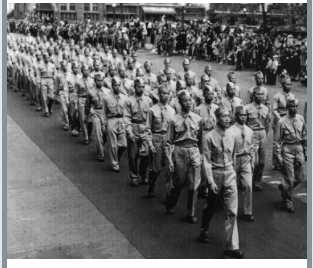
Watch the recorded videos of the September 30, 2021 Chinese American WWII Veterans Congressional Gold Medal Ceremony in Washington, D.C.
Watch the presentation of the National Chinese American WWII Veterans Congressional Gold Medal Presentation on Facebook by clicking the button below. Note there is a 28 minute delay at the beginning of the video.
The Chinese American WWII Veterans Recognition Project is a program of the Chinese American Citizens Alliance (C.A.C.A.), a 501(c)8, and the National Chinese American Citizens Alliance Community Involvement Fund, a 501(c)3. Together we are spearheading a national campaign to identify, honor and recognize the efforts and accomplishments of all Chinese Americans who served in the United States Armed Services in World War II. For more information contact cgminfo@caww2.org.
VENG Group | C.A.C.A. C.I.F., Washington, DC 20035
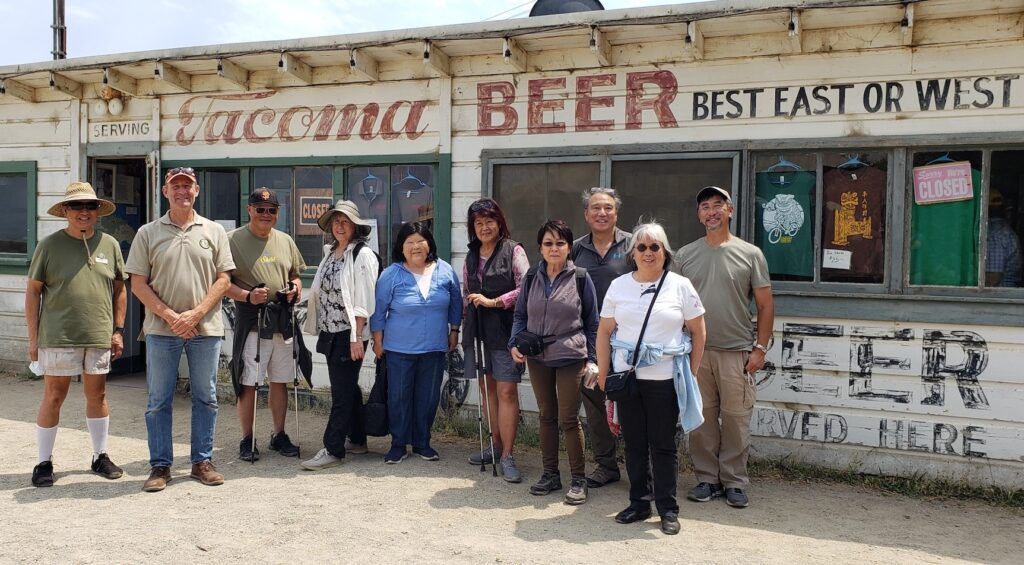
Docent Ed Lai, FOCC Executive Director Martin Lowenstein, Frank Mah, Justine Wong, Doreen Lew, Evelyn Seto, Leona Lau, Joe Yoshino, Jeannie Young, John Lew August 2021
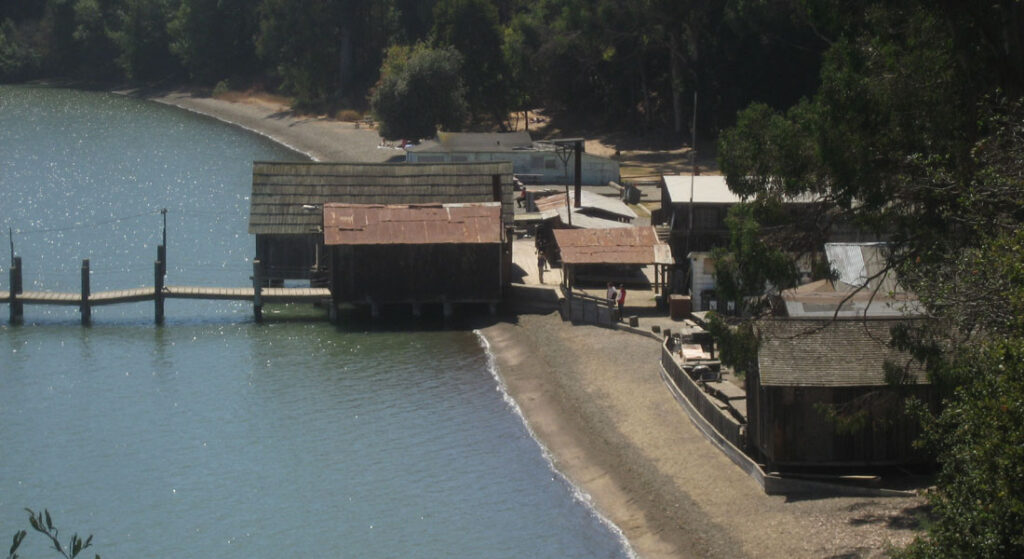
In mid-July, a member of the Bay Area Chinese Genealogy Group (BACGG) contacted Dr. Jason Lau to make arrangements for a docent tour of China Camp State Park. Half of the eight were first time visitors. Martin Lowenstein, FOCC executive director, welcomed the group at the café. The slightly breezy August afternoon visit included a tour of the former Chinese fishing village by Ed Lai. His presentation included the history of Miwok, Spanish, and Chinese inhabitants. His tour began with a walk out on the pier to see the replica of a Chinese fishing junk, museum, and shrimp processing equipment. Back at the cafe, volunteer, Ernie Stanton, shared details about the Quans, the last family to run the café, and pointed out photos from when the village was used as a set for a John Wayne film, Blood Alley.
Naturalist, Jerry Coe, led the group on a nature hike on the Turtle Back Loop. He discussed the history of the pre-colonial Miwok who lived in harmony with the land. Jerry patiently helped members of the group learn to identify different flora. They all tasted pickle weed, a source of salt, from the marshland.
Members of the group joined FOCC and also made donations. An article about China Camp State Park will be posted on the BACGG website later this month.
“China Camp State Park is a 1,514-acre park nestled along the shoreline of San Pablo Bay in San Rafael, California. The park boasts panoramic views, lush oak woodlands, and over 100 acres of protected tidal salt marsh. Whether you’re a hiker or mountain biker, a history buff, or a beach lover, you’ll have an unforgettable day at China Camp.
Visit China Camp’s historic shrimping village and beach area. The village is the perfect place to bring friends and family for a fun day trip. Visit the museum to learn more about China Camp’s fascinating history. Stop by the historic cafe on weekends for snacks and cold drinks. The site features first-come, first-served picnic areas with tables, drinking water, bathrooms, and an outdoor shower.
Learn more about the Chinese shrimp fishing in San Francisco Bay: watch a video by Chinese Whispers: Bay Chronicles.
Friends of China Camp (FOCC) is the community-based nonprofit organization that keeps China Camp State Park open. Since 2012, FOCC has been the sole operator and manager of the park. The organization, largely run by volunteers, is responsible for covering all expenses related to keeping the park open. Find out how you can become a member, and help keep China Camp open and thriving for all.
Friends of China Camp (FOCC) is committed to keeping China Camp State Park open and thriving for our community. To learn more about China Camp, plan a day trip, or camping trip visit the FOCC website at https://friendsofchinacamp.org
As local public health metrics allow, research rooms will open on a limited basis and by appointment only. You must have a virtual consultation before the on-site visit. Staff at all locations will continue to respond to emailed requests for records. Further information is in this press release.
Reopenings and operations will rely on local public health metrics. Check the specific facility page for updates. More information about the National Archives’ response to coronavirus can be found at archives.gov/coronavirus.
[chineseamericanfamilyhistory] National Archives Announces Limited Reopening of Research RoomsInbox
Marisa Louie Lee 6:37 AM (3 hours ago)to chineseamericanfamilyhistory
Hi everyone: Sharing the news about NARA reopening most research rooms starting August 2! I don’t yet have an appointment on the books for our local facility in San Bruno (the National Archives at San Francisco) but I’m looking forward to returning after so many months away.
———- Forwarded message ——— From: National Archives <public.affairs@nara.gov> Date: Fri, Jul 16, 2021 at 11:21 AM Subject: National Archives Announces Limited Reopening of Research Rooms
National Archives Announces Limited Reopening of Research Rooms WASHINGTON, July 16, 2021–The National Archives and Records Administration (NARA) is starting to resume research room operations. Several locations have already begun pilots to test research room policies and procedures that promote social distancing, while otherwise allowing us to serve records in a secure manner, and starting Monday, August 2, most National Archives research rooms will reopen for research on a limited basis. NARA services will look very different from the services provided prior to COVID-19. Research visits will be by appointment only and will require a virtual consultation prior to the onsite visit. Boxes of records will be pulled in advance and will be waiting at an assigned table. Research appointments will initially be for 4-5 hours total, depending on the location. In addition, we have implemented a number of measures to ensure the safety of our researchers and staff: Requiring that unvaccinated visitors wear face coverings during their visit.
Limiting the number of people in each research room. Requiring that those who are sick or do not feel well stay home. Implementing safe social distancing through stanchions, physical barriers, floor markings, one-way paths, and directional guidance. Chairs will be removed and workspaces will be blocked to promote physical distancing between researchers. Following CDC cleaning guidance. In addition, researchers will contribute to sanitizing procedures by cleaning their assigned tables and equipment before and after their research. Researchers should wash their hands thoroughly before entering and after exiting research rooms and regularly throughout their visit to the facility. Hand sanitizer will be readily available outside of the research rooms. Records quarantine: All record material accessed by a researcher will be quarantined after use for three full days, and the records will not be available to other researchers during the quarantine period. Contact tracing: If a researcher or NARA employee experiences COVID-19 symptoms while in a NARA research room or later reports symptoms, a diagnosis, or a close contact with a person who tested positive for COVID-19, NARA will use contact information collected during the researcher registration process to notify other researchers of a potential exposure.Please email the relevant facility using the contact information on their facility page to request an appointment. Researchers should check the specific facility page for details and updates, as the situation can change quickly. Thank you for your patience and understanding as we work to reopen our facilities in a careful and deliberate manner that prioritizes the safety of staff and the public. We look forward to welcoming you back to our research facilities.# # # For press information, contact the National Archives Public and Media Communications staff at public.affairs@nara.gov. 21-50NARA locations nationwide Our mailing address is: 700 Pennsylvania Avenue, NW Washington DC, 20408




 Marisa Louie Lee