



| On Saturday, April 23@10:00 a.m. PDT, we are honored to host Ambassador Elena Wachong (Costa Rica), who will provide a talk focused on the global barriers to finding Chinese diaspora family roots for non-Chinese speakers. Ambassador Wachong will be joined by discussant, Dr. Lai Sai Acon (University of Costa Rica). Dr. Judith Rubenstein (Granite Hills Press) will offer a special introduction, and Dr. Bob Stein will moderate. Please register to attend@https://SDSU.zoom.us/meeting/register/tZwoce2upj8oEtMQaSjpbygDJYMXPvpaJP9U On Saturday, May 7@10 a.m. PDT, we are excited to welcome Tiffany Chin, two-time bronze medalist at the World Figure Skating Championship. Tiffany will be accompanied by San Diego City Council Director of Communications, Chris Chan, who will moderate the conversation. Please register to attend@https://sdsu.zoom.us/meeting/register/tZUsfu6ppzgrEtMWAXr_E0IK82eFiwg5LoI0 On Saturday, May 21@10:00 a.m. PDT, we will be pleased to welcome Dr. Yong Ming Li, a Licensed Physician and Acupuncturist, Herbalist, board-certified Pathologist and Dermatopathologist, who has been practicing, teaching and doing research on traditional Chinese medicine for more than 25 years. In anticipation of the May 27th opening of our exhibition, ACUPUNCTURE – 50 YEARS IN THE UNITED STATES, Dr. Li will speak on the domestic history of the practice, recalling stories in relation to the effort to make this healing art legally supported in different states. You may register to attend @https://SDSU.zoom.us/meeting/register/tZYvduioqTstHNQagILMiTsp5EAbvZTMRitF. The San Diego Chinese Historical Museum is a tax-exempt 501(c)(3) organizationTax ID # 33-0179740 |
Contact: sarah@walkingcinema.org
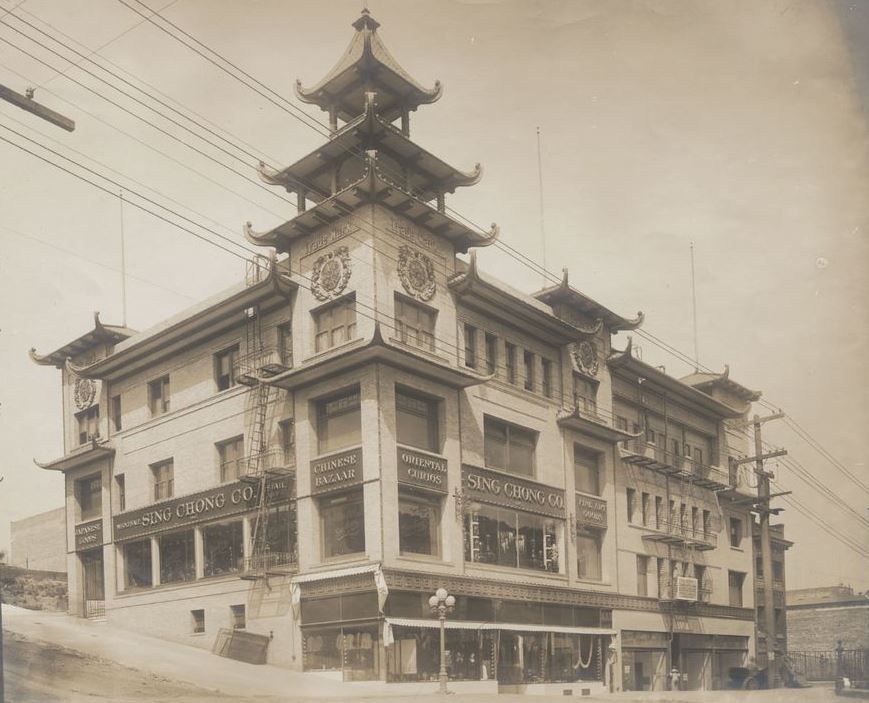
The California Migration Museum is a new initiative that plans to build an immersive experience bringing together stories across California’s migration history. We are currently working on a virtual, augmented reality-enhanced historical walking tour of SF Chinatown that will pivot around the story of the 1906 earthquake and its aftermath. We’re looking for:
Another cross post from Trish Hackett Nicola, who wrote:
There is an article from the New Yorker online. 28 Jan 2022 on legers with photos and biographical information of Chinese living in Downieville, CA about 1890-1930.
“The Dark Purpose Behind a Town Constable’s Journal” by Michael Luo The Article link
Presented by the California Historical Society: January 28, 2022 to June 25, 2022
THE CALIFORNIA HISTORICAL SOCIETY, 678 MISSION STREET, SAN FRANCISCO CA, 94105 Open Thursday – Saturday, 12:00pm – 5:30pm

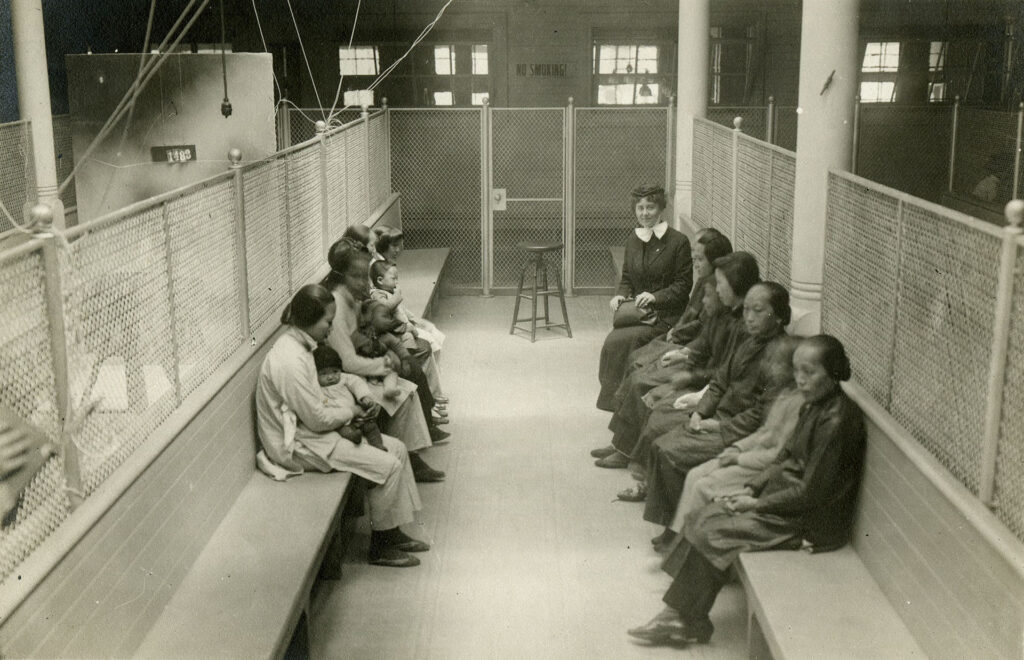
In its new exhibition Chinese Pioneers: Power and Politics in Exclusion Era Photographs, the California Historical Society explores the Chinese immigrant experience during the years of the Chinese Exclusion Act. The exhibition sheds light on the history of Sinophobia and resonates with broader questions about immigration, citizenship, and border control currently being debated.
In the United States during the Exclusion Era years, depictions of Chinese people ranged from deeply derogatory to highly exoticized. The Chinese Pioneers exhibition examines the visual record of how mainstream culture influenced, aligned with, and/or diverged from politics and state actions.
Photography played a potent role in Chinese people’s interactions with the dominant culture and in the government’s fledgling systems of registration, identification, and surveillance. Chinese Pioneers presents photographs—both studio photography and fine-art photos—alongside illustrated newspapers, paintings, and ephemera from the California Historical Society’s collections.
The exhibition is drawn exclusively from the California Historical Society’s deep collections of topical material. On view are rare items, such as one of the earliest known records of Chinese immigration to California, certificates of residence for Chinese laborers (1894–1897), and a one-of-a-kind photo album compiled by a Sierra County justice of the peace who was tracking Chinese residents. Less rare but equally powerful items in the collection include formal portraits of Chinese men and women taken in photographic studios, some operated by Chinese photographers; illustrated newspapers; a painting of a Chinese woman; photographs of Chinese workers; and works by art photographers Arnold Genthe and Laura Adams Armer.
The richness of these collections presents a compelling visual history that dovetails with the social, political, and judicial disenfranchisement of Chinese Californians, as well as moments of Chinese agency and resilience.