Category: Community News

  • [chineseamericanfamilyhistory] CEA in CA – New Yorker article

    Another cross post from Trish Hackett Nicola, who wrote:

    There is an article from the New Yorker online. 28 Jan 2022 on legers with photos and biographical information of Chinese living in Downieville, CA about 1890-1930.

    “The Dark Purpose Behind a Town Constable’s Journal” by Michael Luo The Article link

  • Chinese Pioneers: Power and Politics in Exclusion Era Photographs

    Presented by the California Historical Society: January 28, 2022 to June 25, 2022

    More information here

    THE CALIFORNIA HISTORICAL SOCIETY, 678 MISSION STREET, SAN FRANCISCO CA, 94105 Open Thursday – Saturday, 12:00pm – 5:30pm

    In its new exhibition Chinese Pioneers: Power and Politics in Exclusion Era Photographs, the California Historical Society explores the Chinese immigrant experience during the years of the Chinese Exclusion Act. The exhibition sheds light on the history of Sinophobia and resonates with broader questions about immigration, citizenship, and border control currently being debated.

    In the United States during the Exclusion Era years, depictions of Chinese people ranged from deeply derogatory to highly exoticized. The Chinese Pioneers exhibition examines the visual record of how mainstream culture influenced, aligned with, and/or diverged from politics and state actions.

    Photography played a potent role in Chinese people’s interactions with the dominant culture and in the government’s fledgling systems of registration, identification, and surveillance. Chinese Pioneers presents photographs—both studio photography and fine-art photos—alongside illustrated newspapers, paintings, and ephemera from the California Historical Society’s collections.

    The exhibition is drawn exclusively from the California Historical Society’s deep collections of topical material. On view are rare items, such as one of the earliest known records of Chinese immigration to California, certificates of residence for Chinese laborers (1894–1897), and a one-of-a-kind photo album compiled by a Sierra County justice of the peace who was tracking Chinese residents. Less rare but equally powerful items in the collection include formal portraits of Chinese men and women taken in photographic studios, some operated by Chinese photographers; illustrated newspapers; a painting of a Chinese woman; photographs of Chinese workers; and works by art photographers Arnold Genthe and Laura Adams Armer.

    The richness of these collections presents a compelling visual history that dovetails with the social, political, and judicial disenfranchisement of Chinese Californians, as well as moments of Chinese agency and resilience.

  • Chinese immigrants to Canada – Registers of Chinese Immigration to Canada, 1885–1949

    Marisa Louie Lee shared this post on Grant Din’s forum chineseamericanfamilyhistory link that might be useful to members of BACGG. Here is her repost:

    Hi all,
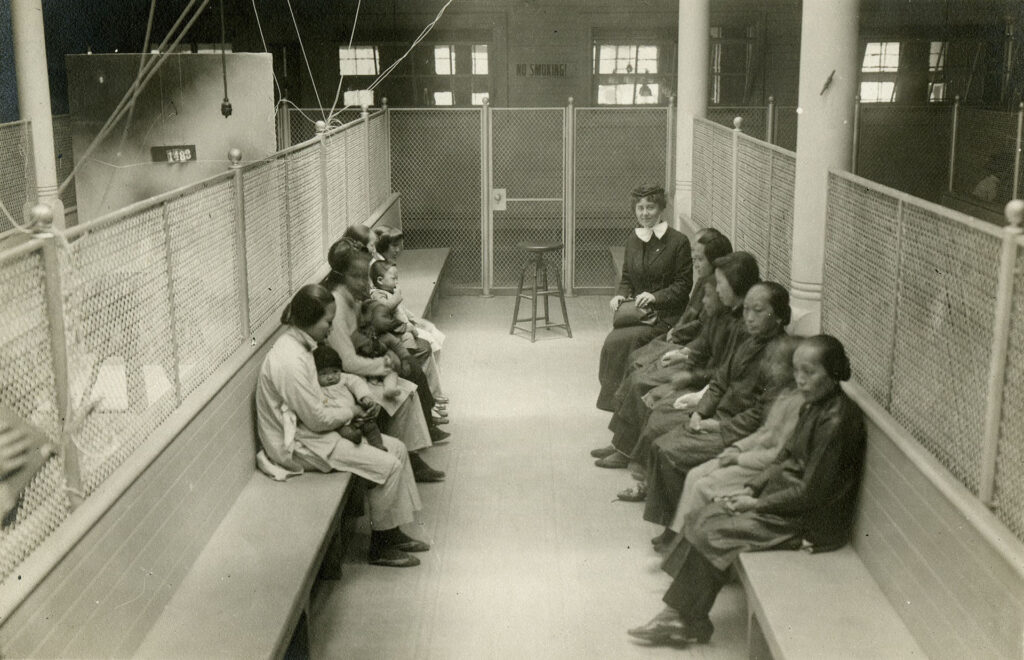
    For those of you interested in Chinese Canadian immigration, Grant asked me to share about the Registers of Chinese Immigration to Canada, 1885–1949. These are held by Library Archives Canada and document “all immigrants of Chinese origin arriving in Canada between 1885 and 1949.”
    You may have heard that these are being newly indexed on FamilySearch, but they were previously indexed as part of a project from the University of British Columbia, and the index is hosted at Library Archives Canada. 
    The index data is also available as a spreadsheet, which has the amazing addition of analysis and “mapping” of the place of birth fields in the register. What resulted is being able to search the spreadsheet by a village name in Chinese characters for two of the counties in Guangdong Province, the place of origin for many pre-WWII Chinese immigrants. 
    As an example, I searched my great-grandfather’s village and found a handful of immigrants to Canada who also came from his village. Interestingly, their 雷 surname was primarily Romanized as LOY rather than my LOUIE.
    Have you found any of your Chinese Canadian relatives or ancestors in the registers? Feel free to share!

    Marisa

  • We Are Bruce Lee: Under The Sky, One Family Exhibition

    Below provided by: Chinese Historical Society of America

    As we all continue to navigate the challenges surrounding the health and safety circumstances currently affecting our community, the nation, and the world at large, CHSA has respectfully delayed the opening of our upcoming We Are Bruce Lee exhibition. Amid these ever-changing times, know that the health and comfort of our community is of the utmost priority and importance to CHSA, and we are carefully monitoring and adapting to the relevant guidelines in order to determine a new exact grand opening date.

    We will get there. 

    As Bruce himself said, “Be Water, My Friend.” We are looking forward to sharing with you We Are Bruce Lee in early 2022.

    Please stay tuned for more information as we announce updates to the exhibition and other programming and content. To learn more about or support this exhibition, check out We Are Bruce Lee and follow CHSA.

    In the meantime, pre-sale tickets will be made available soon, with CHSA members receiving first priority. For more information on how to become a member, to help sustain our museum’s work, please visit CHSA.org.

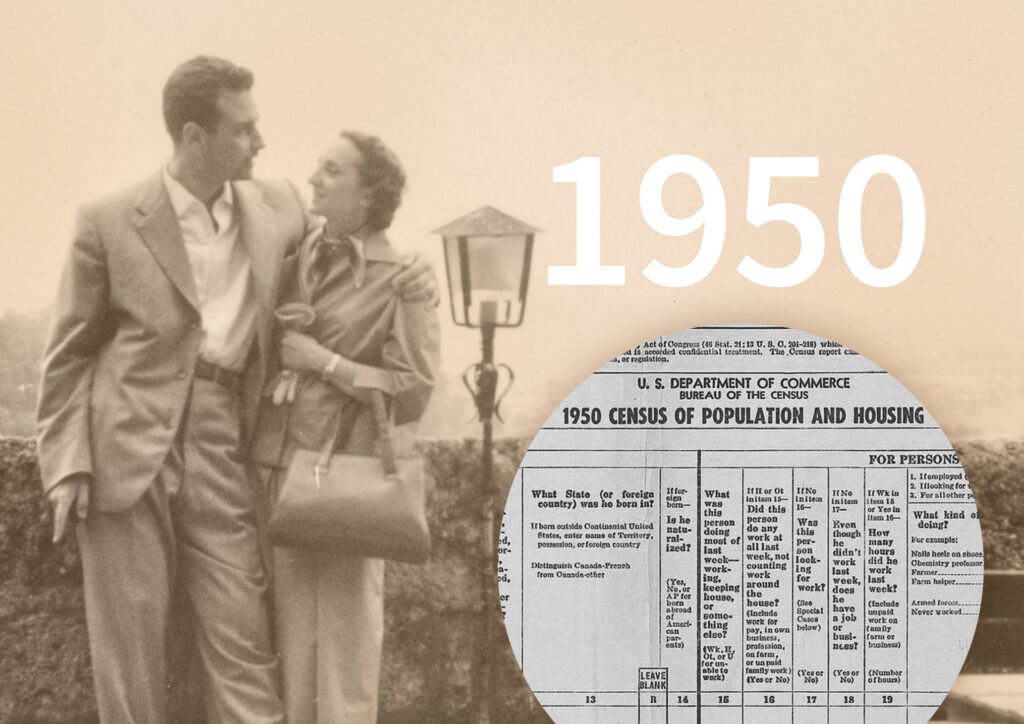
  • 1950 US Census Available 4/1/2022

    From Grant Din, grant@tonaidin.net

    I just got this from fellow genealogist Renee Carl last week. “NARA just dropped a press release announcing that the 1950 Census will be powered with an AI/ML/OCR name search.” Renee was involved in a beta test and was seriously impressed with this Artificial Intelligence/Machine Learning/Optical Character Recognition technology. I encourage you to read the NARA release she links to. It sounds like this technology will allow you to search for names right from the time the census is released on April 1, 2022, but in case you can’t find who you are looking for, there are actually other ways.

    When the 1940 census results were released in 2012, the volunteers at Family Search,  the paid indexers at Ancestry and other people took about 4-6 months to index the records, so this technology could save us many months of waiting. In case you can’t find your family through this name search right away, you can also search through Enumeration Districts (E.D.s), which are smaller segments of a community and not too difficult to look at block by block.

    There are ways to figure out ahead of time which E.D.s your family members may have lived in so you can look in them as soon as the census is released on April 1. I just attended a webinar by Thomas MacEntee and he had two handouts he encouraged us to share (please attribute them to him if you pass them along). One is full of great information and links (ignore where he says the 2022 release date is two years away!) and the other is a spreadsheet you can use to input your family’s (or whomever you are researching) information in an organized fashion, which he describes in the informational handout.
    If you know or can figure out where the person you’re researching lived (there are many directories online, or you can use correspondence or ask someone who was alive then), you can use an amazing tool developed by Steve Morse (developer of the Intel 8086 chip!). Go here:https://stevemorse.org/census/unified.html and click on 1950 in the pull-down menu at the top of the page. Then pull down the appropriate information to find out which enumeration districts correspond with the address you’re looking for.

    It also works for rural areas. For example, a lot of people have roots in the Sacramento River Delta – towns like Isleton, Walnut Grove, Locke, Courtland, etc. You can select Sacramento County, then under city, choose “Other.” I typed in “Courtland,” and got 34-119, which includes ” GEORGIANA JUDICIAL TOWNSHIP (TRACT SC-136) BOUNDED BY (N) COUNTY LINE, JUDICIAL TOWNSHIP LINE; (E) JUDICIAL TOWNSHIP LINE; (S) LAUREL LN; (W) SACRAMENTO RIVER, COUNTY LINE, AND SHOULD CONTAIN LAMBERT, VORDEN, COURTLAND.”

    That’s just one example. This information should help you find family members when the 1950 census is released on April 1, 2022! Please post if you have other ideas or if I have some incorrect information.